Neptune Car Services blog

Neptune Car Services Blog

Tips, guides and news from our team of Japanese car specialists in Birkenhead, Wirral.

Air Conditioning

How to Tell If Your Car Air Conditioning Needs Regassing

Is your car blowing warm air? Taking longer to cool down? These are the classic signs your AC refrigerant is low. Here's what to look for — and what to do about it.

Car air conditioning systems lose refrigerant naturally over time — even if there's no visible leak. Most cars lose around 10–15% of their refrigerant every year, which means the system gradually becomes less effective. If you haven't had a regas in the last two to three years, there's a good chance your AC isn't working at full capacity.

The most obvious sign is warm or lukewarm air coming from the vents when the AC is switched on. You might also notice the system takes much longer to cool the cabin than it used to, or that it only works properly on the coldest setting. In some cases the AC may stop working altogether.

Other signs include unusual smells when the AC is running — this can indicate mould or bacteria in the system — or a hissing sound, which may point to a refrigerant leak rather than simple depletion.

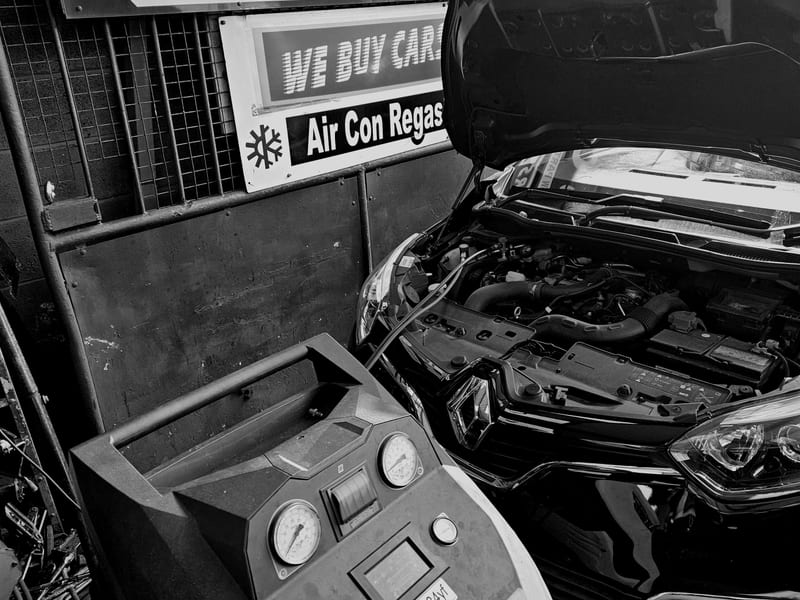
At Neptune Car Services in Birkenhead, we regas all makes and models using both R134a and the newer R1234yf refrigerant. Small cars start from £50 and the whole job takes around 45–60 minutes. We're currently running an autumn sale with £10 off — call 07802 368793 to book.

MOT Testing

What Is Checked in a Class 4 MOT Test?

An MOT can feel like a mystery — your car goes in and comes out with a pass or fail. Here's exactly what our testers look at during a Class 4 MOT.

A Class 4 MOT covers cars with up to eight passenger seats. It's a standardised test set by the DVSA that checks whether your vehicle meets the minimum legal safety and environmental standards required to drive on UK roads.

The main areas checked are: brakes (including handbrake efficiency), steering and suspension, tyres (tread depth, condition and pressure), lights (headlights, brake lights, indicators, fog lights), exhaust emissions, bodywork and structure, seatbelts, windscreen and wipers, mirrors, horn, and fuel system.

Faults are categorised as Advisory (worth monitoring), Minor (doesn't affect the pass), Major (causes a fail), or Dangerous (causes a fail and the car must not be driven). A Major or Dangerous fault means your car fails its MOT.

At Neptune Car Services in Birkenhead, Class 4 MOT tests start from £54.85. If your car fails, we offer a free re-test within 10 working days. We carry out Class 4 tests only — we do not test vans or minibuses. Call 07802 368793 to book.

Japanese Cars

The Best Pre-2010 Japanese Cars to Buy — and Why We Love Working on Them

Pre-2010 Japanese cars have a reputation for reliability, affordability and longevity that's hard to beat. Here are our favourites from the workshop floor.

We've been working on Japanese cars since 1971, and the pre-2010 generation remains some of the most satisfying vehicles to service and repair. They were built to last, parts are generally available, and they reward careful maintenance with extraordinary longevity.

The Toyota Corolla (E120 and E130 generations) is perhaps the most reliable car ever made. With a 1.4 or 1.6 petrol engine and minimal electronics, there's very little to go wrong. We regularly see examples with 200,000+ miles that still run perfectly.

The Honda Civic (seventh and eighth generation) is another favourite. The 1.4 and 1.6 VTEC engines are smooth, economical and durable. The Type R variants are particularly sought after and hold their value well.

For something more characterful, the Mazda MX-5 (NB and NC) is hard to beat. The 1.8 and 2.0 engines are simple and responsive, and the cars are genuinely fun to drive. Subaru Imprezas and Mitsubishi Evos are also popular with enthusiasts — we have particular expertise with both.

If you own a pre-2010 Japanese car and need servicing, repairs or diagnostics in Birkenhead or the Wirral, we're the specialists. Call 07802 368793 or use our contact form.

Servicing

Interim, Full or Major Service — What's the Difference?

Not sure which type of car service you need? Here's a plain-English guide to the three main service types and when each one is appropriate.

Car servicing can be confusing — garages use different names and the content varies. Here's what each level typically covers and when you should book one.

An interim service is the lightest option, recommended every 6 months or 6,000 miles (whichever comes first). It covers the essentials: engine oil and filter change, tyre pressures and condition, brake fluid level, lights, wipers, and a general visual safety check. It's ideal for high-mileage drivers who cover a lot of ground between annual services.

A full service is the standard annual service, recommended every 12 months or 12,000 miles. It includes everything in an interim service plus air filter, fuel filter (where applicable), spark plugs, coolant level, power steering fluid, cabin filter, and a more thorough inspection of brakes, suspension and steering components.

A major service is the most comprehensive option, typically recommended every 2–3 years or 24,000–36,000 miles. It covers everything in a full service plus timing belt inspection (and replacement if due), gearbox and differential fluid, brake fluid replacement, and a full inspection of all major systems.

At Neptune Car Services in Birkenhead, interim services start from £89. Call 07802 368793 or fill in our contact form for a quote based on your specific vehicle.